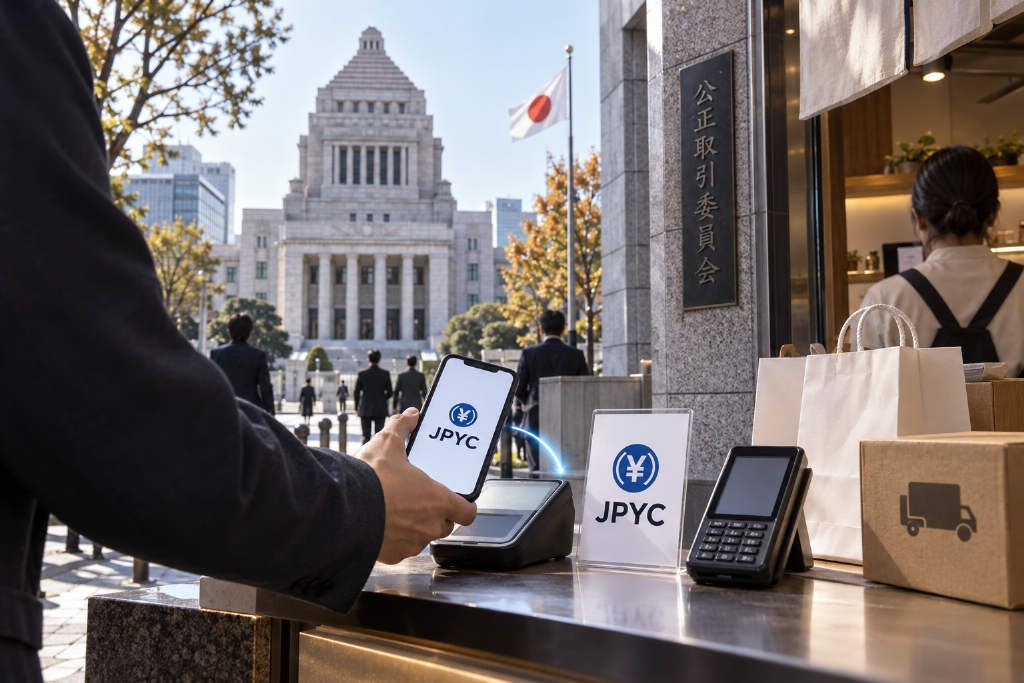
JPYC2026-10-09 05:54:12JPYC submits stablecoin payment information to Japan Fair Trade Commission, says more than 150 merchants have integrated itJapanese yen stablecoin issuer JPYC said it submitted information to the Japan Fair Trade Commission on Sept. 14, covering the competitive environment in the cashless payments market as stablecoin payments spread, along with JPYC’s mechanism and related initiatives. The company said that since its issuance in October 2025, more than 150 physical stores, mobile vendors and e-commerce merchants have adopted JPYC payments. JPYC also said its model allows value to be transferred directly on-chain without charging merchant fees. Based on that structure, some merchants are considering using the cost difference for customer incentives such as payment discounts, free shipping or loyalty points. The update was carried by Techub News, citing a JPYC announcement.20
JPYC2026-10-09 05:22:50JPYC submits information to Japan Fair Trade Commission over stablecoin payment discountsJPYC, a Japanese yen stablecoin issuer, said on Oct. 9 that it had submitted information to the Japan Fair Trade Commission on Sept. 14 regarding the competitive environment for cashless payments as stablecoin use expands. The company said JPYC has been used at more than 150 stores since its issuance in October 2025. Because value transfers are completed directly on blockchain rails, JPYC does not charge merchants member-store fees, which it said makes costs materially lower than existing cashless payment methods. Some stores want to return those savings to customers who pay with JPYC through discounts or free shipping. Still, they are concerned such incentives could conflict with credit card merchant rules that prohibit surcharges, cash discounts, or steering customers to other payment methods. JPYC said decisions on which payment methods to accept and how to price goods should fall under merchants’ own business judgment, and that passing cost reductions on to customers benefits both consumers and competition. It also cited a 2022 report by the Japan Fair Trade Commission saying blanket bans on such conduct could, in some cases, raise antitrust concerns.20